

Emergency & High-Value Tree Service Landing Pages
The short answer
Most agencies sell tree surgeons on "emergency call" landing pages, one big storm job a year you can charge double for. Real businesses don't run on that. What actually fills the diary is steady work, something like 20–30 calls a month, built around specific, high-paying services. This page covers the landing pages that do that job properly.
Storm work happens, but it's not the volume play.
Felling, crown work, commercial, surveys and hedge jobs that keep the diary full.
Winter, spring and summer pages double as email content too.


 Trusted by growing tree surgery businesses
A landing page is where someone lands when they click through from a Google search or an advert, built around one specific service so the page matches exactly what they were looking for.
Why "emergency" isn't the play
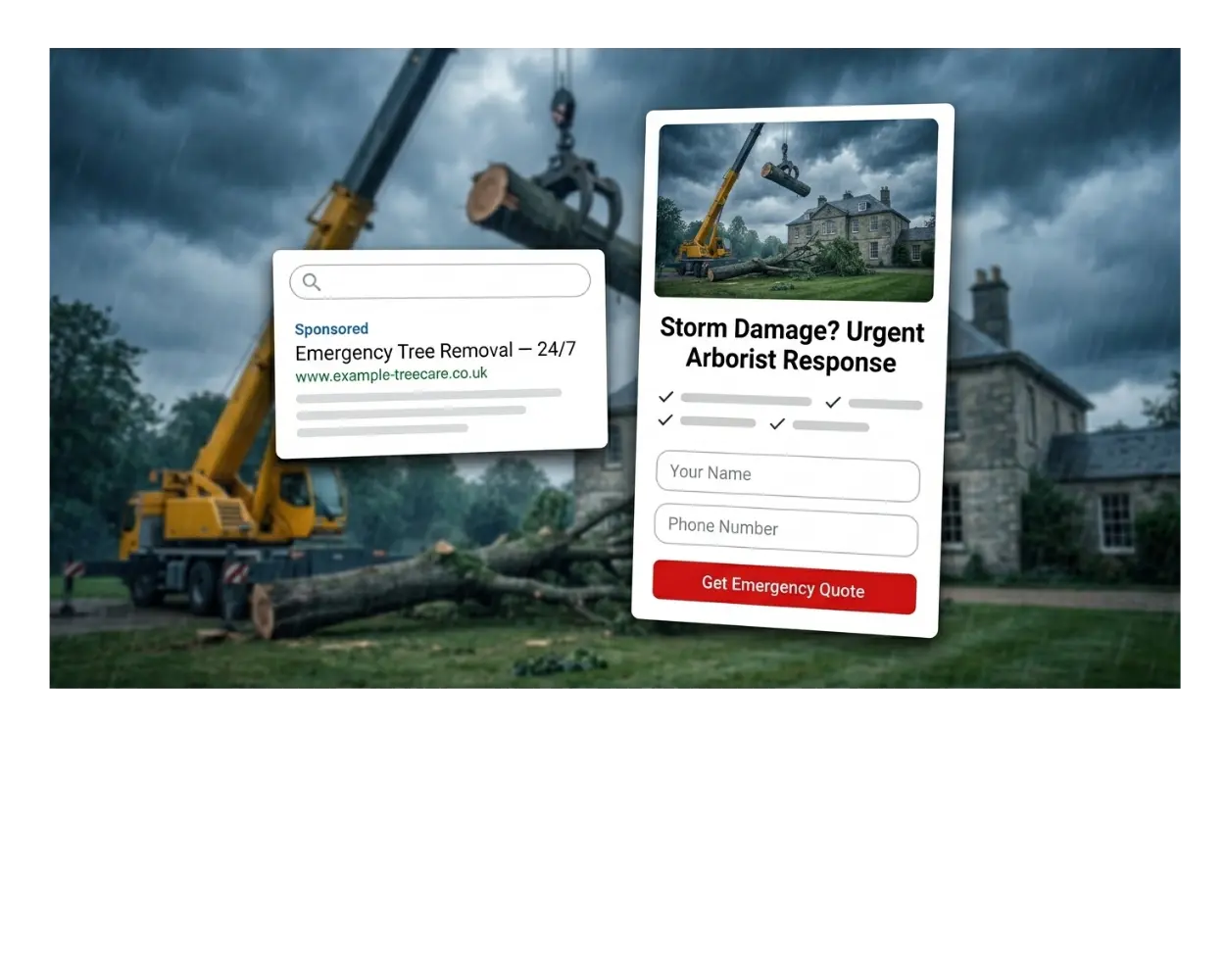
Most agencies will try to sell a tree surgeon on an "emergency tree care" landing page: a storm hits, the phone rings, and you charge a premium for getting there fast. That's real work, but it happens once or twice a year. A business that wants a full diary needs landing pages built around the services people search for and book regularly, not the one big storm call. That's what a smart website is built to do, and it's what the rest of this page covers.
This matters for both organic search and paid ads. Someone searching "emergency tree removal" right now is a different person from someone searching "tree felling cost" or "hedge trimming near me," and they need a different page, not the same one with a different headline. Six landing pages below cover the services that actually keep a diary full, with emergency work sitting alongside them rather than carrying the whole site on its own.
The seven landing pages that fill the diary
Emergency Tree Surgery (worth having, not worth relying on)
Storm damage and fallen trees happen maybe one to three times a year for most tree surgeons. A dedicated page is worth having so the work gets caught when it lands, and it's fine to charge a premium for it. But it's not the volume play. The six pages below are where steady, repeat-bookable work actually comes from.
When this page does get hit, speed is the whole game: a phone number visible without scrolling, clear "available now" messaging, and nothing standing between the click and the call. It's the one page on the whole site where a contact form matters less than a number someone can tap straight away.
Seasonal Landing Pages (winter, spring, summer)
A seasonal landing page does double duty: it targets the search terms people use that time of year, and it doubles as content for a seasonal quote campaign emailed out to past customers. Three short pages cover most of the year:
Winter
Dormant-season structural work: crown reduction (cutting back the upper branches to reduce a tree's overall size), dead-wooding (removing dead branches before they can fall), and storm-damage prep before the next round of bad weather. The tree's bare, so problems are easier to spot and price.
Spring
Crown thinning and lifting (thinning out the branches and raising the lowest ones) as growth resumes, plus the start of hedge season. The first warm weeks are usually when enquiries pick up after a quiet winter.
Summer
Hedge trimming at its peak, plus general pruning and maintenance while access and weather are easiest. The busiest window for volume work all year.
Each one only needs to be live a few weeks before its season starts, since that's when the search volume and the email open rates both pick up. They're short pages by design, built to be quick to update and easy to reuse the following year.
Tree Felling & Removal (fast money)
Felling means cutting a tree down rather than working on it piece by piece. Where there's room to work, felling and removal turns around quickly: the tree comes down, gets processed on the ground, and the job's done. It's a big charge for a short turnaround, and the margin reflects that speed, not just the size of the tree. This page tends to convert well off a quick quote, since most people booking it already know exactly what they want gone, they just need confidence that it'll be done cleanly and the site left tidy.
Climbing Tree Surgery & Crown Work (slow, high-value)
Technical work on large trees near houses, cars, or buildings needs a climber plus two people on the ground, one watching for safety, one clearing as branches come down. Nothing gets dropped, it's lowered by rope, piece by piece. This costs more than felling, not just because it's harder, but because of the time it takes and the size of the crew needed to do it safely. This is also the page where insurance and qualifications matter most to the person reading it, since they're trusting a crew to work directly above their house or car.
Commercial Tree Services
Hotel groups, building managers, and parks teams need something different from a homeowner: a contractor that's fully licensed and insured, and that can produce a proper risk assessment for every site before work starts. A dedicated page lets a commercial decision-maker see straight away that this side is covered, not just the climbing. It's also worth showing that the same crew can handle multiple sites or a standing contract, since that's usually what's actually being decided, not a single one-off job.
Hedge Trimming (steady, high-volume)
Hedge trimming won't be the biggest single invoice sent out, but it's high volume, especially through spring and early summer, and reliable enough to keep a crew employed alongside the bigger jobs. A dedicated page catches that search volume on its own, rather than getting buried inside a general tree surgery page. It's also the easiest service to turn into repeat work, the same customer booking again every year once the first job's done well.
Tree, Wildlife & Ecological Surveys
A tree survey records every tree on a site, its condition, species, and any work needed, usually required before a planning application (the permission a council needs to give before building work can start) or building project can go ahead. Wildlife and ecological surveys check for protected species, like bats or nesting birds, before any tree work can legally start near them. This page targets a different buyer entirely, developers, architects, and homeowners with planning permission to sort, who need the paperwork in place before any cutting happens. It's booked well ahead of the actual work, often months before a chainsaw is involved.
Together, these seven pages are what actually keeps a diary full: not one storm call charged at double rate, but a steady spread of bookable work across the whole year. The emergency page still earns its place, it just isn't the headline act.
For the full technical breakdown of building pages like these properly, structure, speed, mobile-friendliness, see How to Build the Best Tree Surgeon Website in 2026.
Questions about emergency and high-value landing pages
Why isn't one emergency landing page enough?
Which tree surgery services pay the most?
Do I need a separate landing page for every season?
What's different about pricing felling versus climbing work?
What do commercial clients look for that homeowners don't ask about?
What's a tree survey and do I need one before building work?
Keep reading
Smart Websites for Tree Service Companies How to Build the Best Tree Surgeon Website in 2026Last reviewed: June 2026