

Best Tree Service Website Examples

The short answer
These are real (anonymised) tree service website examples showing the six things every good site gets right: easy ways to get in touch, a clean local-feeling design, real photos instead of stock trees, fast load times, and a clear structure that's easy to find your way around. None of it needs to look flashy, and there are a few extra things worth checking too.
Click-to-call, chat, and forms that actually get answered.
Clean design and real people, not a corporate template.
Under two seconds, so visitors don't bounce before they see it.


 Trusted by growing tree surgery businesses
What actually makes a website good
Forget which site "looks nicest." Tree surgeons searching this aren't after design inspiration, they want to know what's worth copying. The sites that actually convert get five specific things right: contactability, design, images, speed, and structure. Real (anonymised) examples of each are below, plus a few extra things worth checking once you've covered the basics.
- Contactability — multiple easy ways to get in touch, with automation behind them.
- Design — clean and local, not corporate.
- Images — real people and real jobs, not stock trees.
- Speed — loads in under two seconds on mobile.
- Structure — easy to find the right page, fast.
The five features that matter
Here's exactly what each one looks like in practice, with a few extra things worth checking once you've got the basics covered.
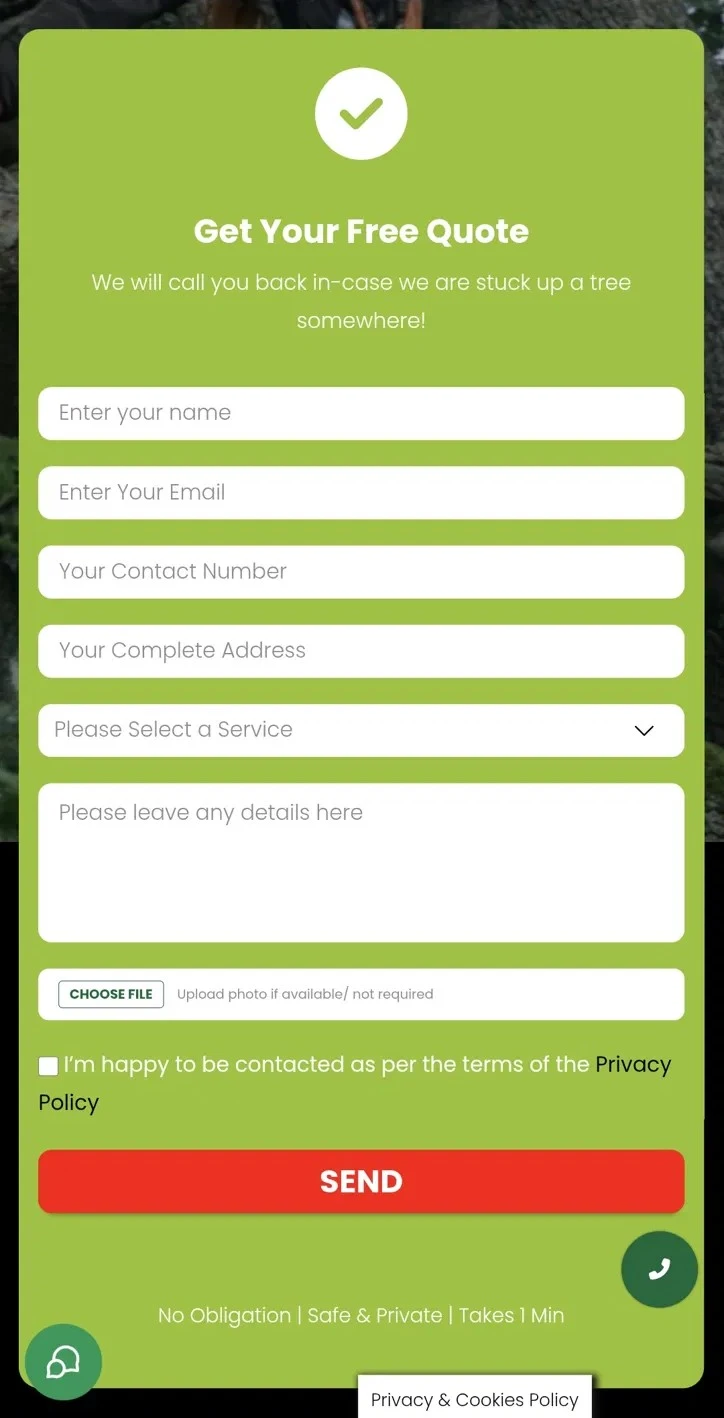
Contactability that actually gets used
The feature: click-to-call buttons, chat widgets (including AI chat), and contact forms, all backed by automation that catches anything missed. If someone fills in a form, a follow-up call or text goes out on its own rather than waiting on someone to notice it. The same logic sits behind our AI-powered call answering and missed call text back features.
Design that looks local, not corporate
The feature: clean and modern, not fancy. People searching for a tree surgeon want the local guy round the corner, not a site that reads like a national chain. A few simple layout choices, local references, and plain local language do more than an elaborate design ever will.

The right kind of images
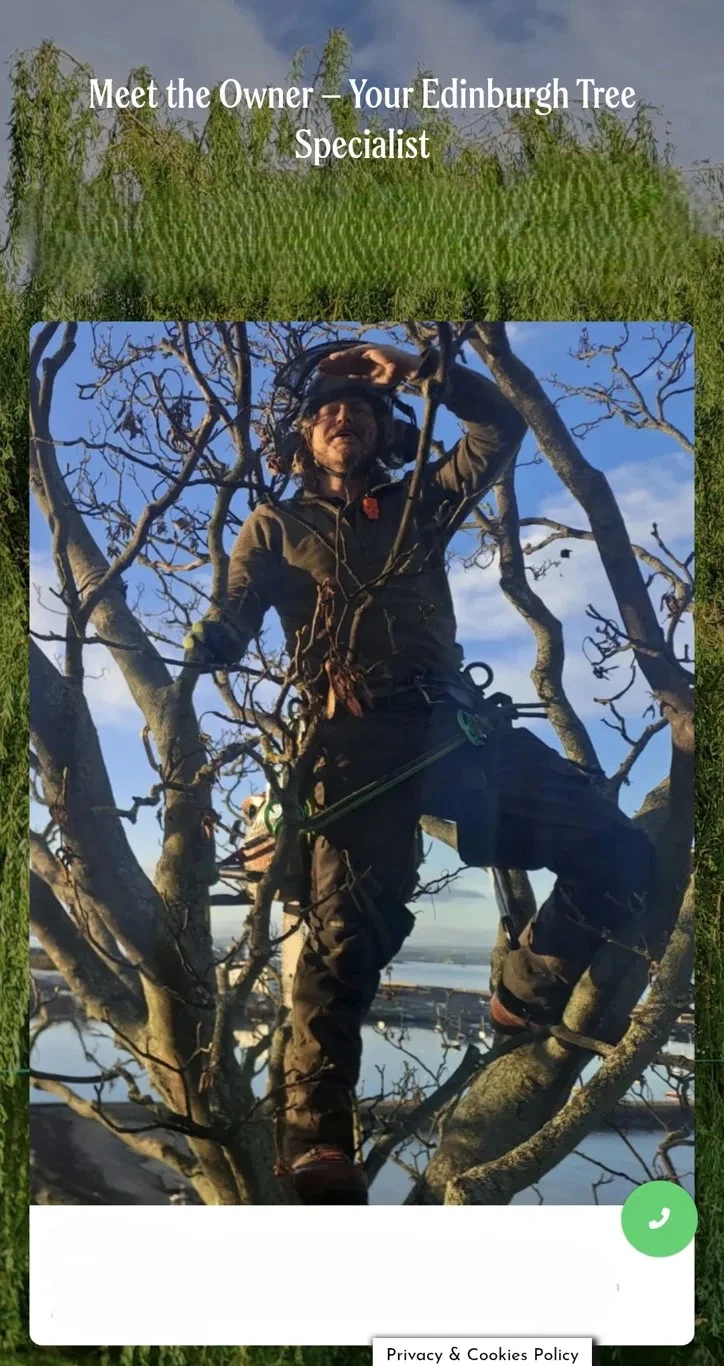
The feature: staff and owner photos, smiling faces, and real local jobs, not generic stock trees. This isn't just nicer to look at, it's a genuine reason people pick up the phone. From our own experience, somewhere between one in five and one in ten callers say they chose a business because it felt local, and a real photo of a real person is usually what convinced them.
Want this built in from day one?
Want a site built with all of this already in place? Book a Call and we'll talk you through it.
Technical basics: speed and mobile-friendliness
The feature: a sub-two-second load time on mobile, where most tree surgeon traffic comes from. The single biggest fix is usually image size. If your photos are large JPEGs or PNGs straight off a phone, converting them to WebP shrinks the file without losing quality — just type "file converter to WebP" into Google and use any of the free tools that come up. Mobile-friendliness matters just as much: buttons big enough to tap, text that doesn't need zooming, and a layout that doesn't break on a small screen.
A structure that's easy to find your way around
The feature: a simple branching structure — home page, then service pages, then local area pages underneath. That's it at a high level, nothing more complicated needed. For the full breakdown of how to build that structure properly, see How to Build the Best Tree Surgeon Website in 2026 — this page sticks to examples rather than repeating that detail.
A few more things worth checking
Outside the five core features, a handful of smaller things separate a good site from a great one:
- On-page reviews — showing reviews directly on the site, not just linking off to Google.
- Visible proof — certifications, insurance, or qualifications shown clearly, not just claimed in text.
- A clear service area — so visitors know straight away if you cover their postcode.
- Real before-and-afters — actual completed jobs, not just a generic "after" shot.
Questions about tree service website examples
What actually makes a tree surgeon's website good?
Do I need professional photos on my website?
How fast should my website load?
Should I use click-to-call, a contact form, or live chat?
Why does local design matter more than a flashy one?
Last reviewed: June 2026